 PalworldZone
Mastering Palworld Breeding: A 2026 Guide to Perfect Pals
I still remember my first clumsy attempt at Pal breeding back in early 2024, tossing two seemingly compatible creatures into a hay-bale pen and wondering why nothing happened. Two years later, as I stare at a perfectly incubated egg from a Frostallion-Jetragon pairing, it’s clear how far both the community and the game have evolved. Palworld’s breeding system has become one of its most rewarding mechanics—a living, breathing gene puzzle where every session feels like you’re blending colors on a painter’s palette, never quite sure what shade will emerge. Whether you’re a returning player or a newcomer diving into the 2026 expansions, this guide will walk you through everything you need to know to breed the strongest, rarest, and most impressive Pals.
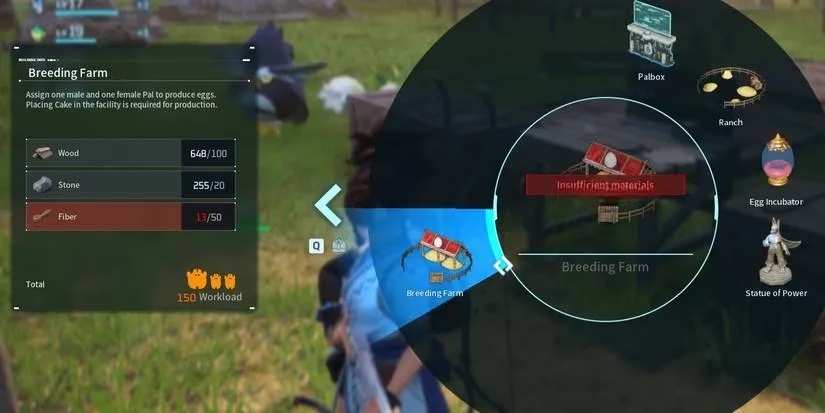
Before you even think about pairing up your Pals, there’s a hard level requirement: you must reach level 19 to unlock the breeding farm from the Technology menu. Leveling up fast can be done by catching everything in sight—each new catch after the first 10 of a species grants bonus XP, so become an obsessive collector early. Once you hit that magic number, you’ll need to gather 100 Wood, 20 Stone, and 50 Fiber to construct the farm. These materials are common enough that even a casual exploration run through the starting areas should net you plenty. Remember, however, that the breeding farm isn’t a set-it-and-forget-it machine; it’s more like a small ecological theater where your Pals are the actors. Without the right props and cues, the show simply won’t go on.
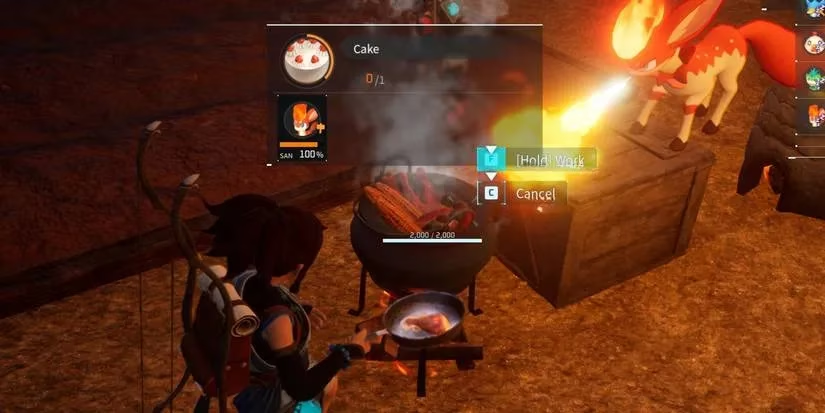
The most crucial prop is cake. Yes, cake! Think of it as the love catalyst that transforms two Pals from mere barn-mates into dedicated partners in the dance of life. Each breeding attempt consumes exactly one cake, placed in the bin just outside the breeding farm. Crafting cake requires a mixture of ingredients like flour, eggs, milk, and honey—all obtainable through farming and ranching setups you’ll gradually master. I can’t stress this enough: a shortage of cake will grind your breeding operation to a halt, so always keep a generous stockpile.
Once your farm is built and the cake bin is full, it’s time to assign two Pals—one male and one female. Toss them into the pen like you’re casting actors onto a stage. They don’t need to be the same species; in fact, crossbreeding is where the real magic (and unpredictability) happens. The moment you see the notification “Love Is Blossoming,” you know the performance has begun. However, patience is key. Egg production isn’t guaranteed on every cycle, much like a dramatic rehearsal that doesn’t always nail the final scene. Keep the cake flowing, and soon an egg will materialize in the center of the hay bales, ready to be whisked away to an incubator.
Incubation introduces another layer of depth. Unlock the incubator at level 7 using Ancient Technology Points, and remember that each egg type demands different conditions. Some eggs need a cozy warmth—if you’re breeding in a chilly biome, heat up the incubator just as you would preheat an oven for a delicate soufflé. The timer varies dramatically, from a few minutes for common eggs to well over an hour for legendary ones. During my recent project hatching a Shadowbeak lineage, I learned to treat the incubator like a time-kissed forge; rush it, and you might compromise the genetic gifts waiting inside.
When selecting parents, you’re essentially playing a game of genetic dice. The offspring inherits the best active and passive skills from its ancestors, which means you’ll want to breed Pals that already carry top-tier abilities. This is where the breeding system shines brightest—it’s a long-term investment, akin to curating a library of living books, each generation passing down chapters of power, resistance, or speed. Two mediocre parents will rarely produce a champion, but a carefully chosen pair can yield a Pal that reshapes your entire team dynamic.
Not every combination works, though. If you see an error message stating you’re missing one of the sexes, the species simply aren’t compatible. Trial and error has always been part of the fun, and by 2026, community wikis are filled with known breeding paths, but I still recommend experimenting. Some of the most exciting discoveries in my own play-through came from unexpected pairings—like the time a Relaxaurus and a Nitewing produced an offspring with a skill combination I’d never seen before.
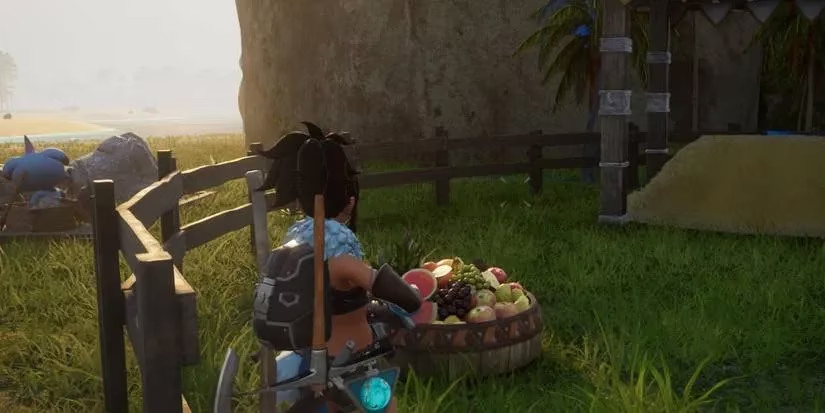
Here’s a pro tip I wish I’d known two years ago: place a food bin directly inside the breeding farm, near the entrance but not in the egg-spawning center. Pals get hungry during their romantic interludes and will wander off to the nearest feeder, which can pause the breeding cycle. By putting food right there, you keep them in the zone, much like providing backstage snacks so actors never miss their cues. If you have a Red Berry Farm or any automated food production, assign transport Pals to keep that bin stocked.
In 2026, with all the updates and expansions, breeding remains the most reliable way to obtain Pals that are otherwise a nightmare to catch in the wild. Want a Jetragon without chasing one across a volcano? Breed it. Need a Frostallion Noct with perfect passive skills? The breeding farm is your gene-splicing workshop. Even elusive variants like Astegon or Blazamut can be produced through specific combinations, saving you countless hours of searching. I’ve seen players turn their bases into massive breeding complexes, resembling futuristic hatcheries where rows of incubators hum with potential.
Remember, the breeding timer runs while Pals are awake, pausing at night when they sleep. If you’re impatient, adjust your server settings or simply build in a region with longer days. Above all, treat breeding not as a grind but as a fascinating exploration of Palworld’s hidden genetic web. Every egg I crack open still gives me a jolt of anticipation, like unwrapping a gift whose contents were determined by my own strategic choices. So fire up that farm, bake a mountain of cakes, and start crafting the ultimate Pal lineage—your adventure is just beginning.
This perspective is supported by reporting from PC Gamer, whose ongoing Palworld coverage often underscores how breeding systems become true endgame progression when players optimize repeatable loops—consistent resource pipelines (like cake ingredients), stable base automation, and deliberate trait selection—so each generation meaningfully improves on the last rather than relying on luck alone.
Comments