 PalworldZone
Palworld Breeding Mechanics: The Frustrating Reality of Passive Skill Cancellation
Palworld's breeding system, a cornerstone of its creature-collection and survival gameplay, offers players a vast array of possibilities for creating powerful Pals. The 2026 landscape of the game continues to see players deeply engaged with this mechanic, aiming to produce the ultimate companions for battling Alphas and tackling the game's toughest challenges. However, this deceptively complex system harbors a significant potential for frustration, as the random nature of skill inheritance can lead to results that are not just suboptimal, but completely counterproductive. The pursuit of the perfect Pal through breeding is as much a game of chance as it is of strategy, where significant investments of time and resources can be rendered futile by the whims of RNG.
The Perils of Passive Skill Inheritance
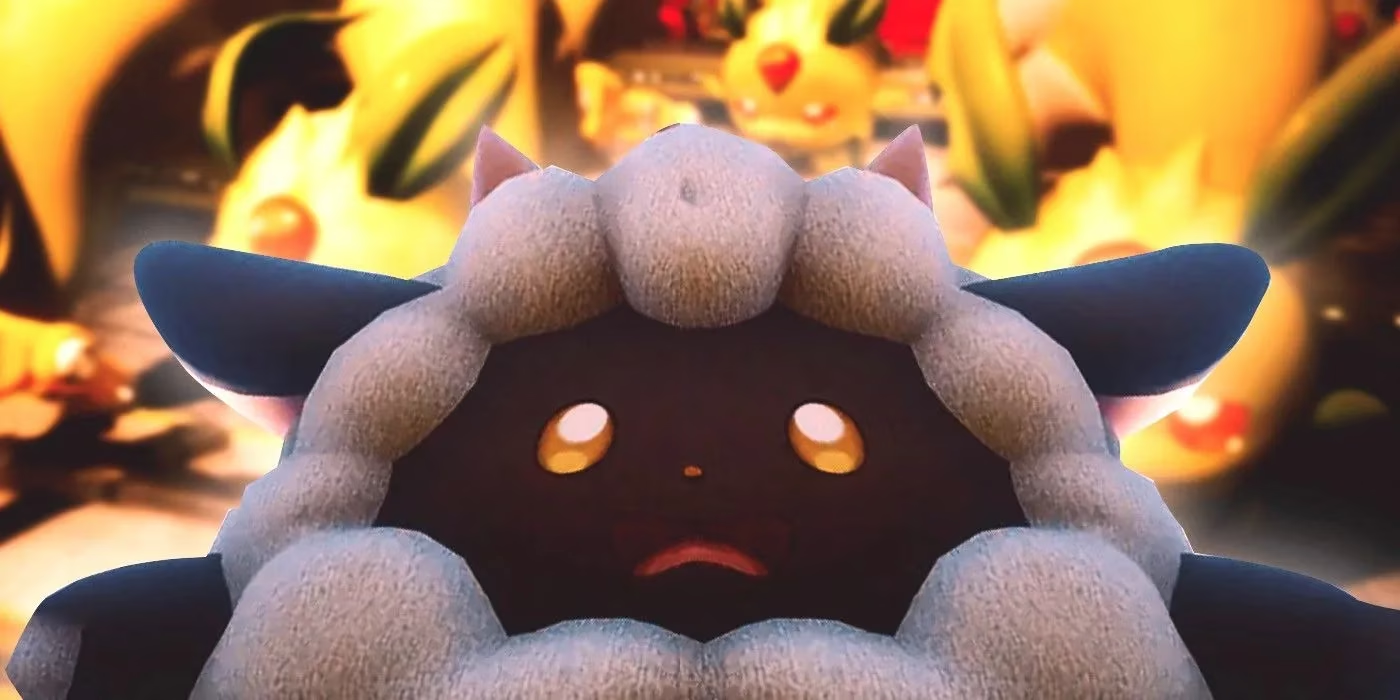
At the heart of breeding's unpredictability are Passive Skills. These are generally found at random by catching wild Pals until one with desired attributes is discovered. The core promise of breeding is the ability to pass these skills down to offspring. Yet, this inheritance is again governed by randomness. This means creating a Pal with an ideal set of skills inherited from its parents can be a lengthy, resource-intensive process. The system's complexity allows for incredible combinations, but it also opens the door to disastrous ones where skills effectively cancel each other out.
A prime example of this phenomenon was documented by a player. They deliberately bred for a Penking, hoping to combine powerful traits. The resulting Pal ended up with a specific set of four Passive Skills:
-
Musclehead (increases Attack)
-
Work Slave (increases Work Speed)
-
Artisan (increases Work Speed)
-
Slacker (decreases Work Speed)
This particular combination created a perfect storm of statistical negation. The buffs and debuffs to Work Speed balanced each other out to an effective 0% bonus. Simultaneously, the Pal possessed no net positive effect on its Attack stat from this particular skill set. For a player relying on breeding to create powerful combatants or efficient workers, such an outcome represents a total loss, wasting the cakes, time, and effort spent on the breeding process.
Breeding is Not the Sole Source of Frustration
It is crucial to understand that this issue is not exclusive to the breeding pen. The random generation of Passive Skills on wild Pals means they, too, can be found in the open world with similarly self-defeating combinations. A player might spend hours searching for a rare Pal with a coveted skill like "Lucky" or "Ferocious," only to capture it and find that skill paired with another that completely negates its benefit.
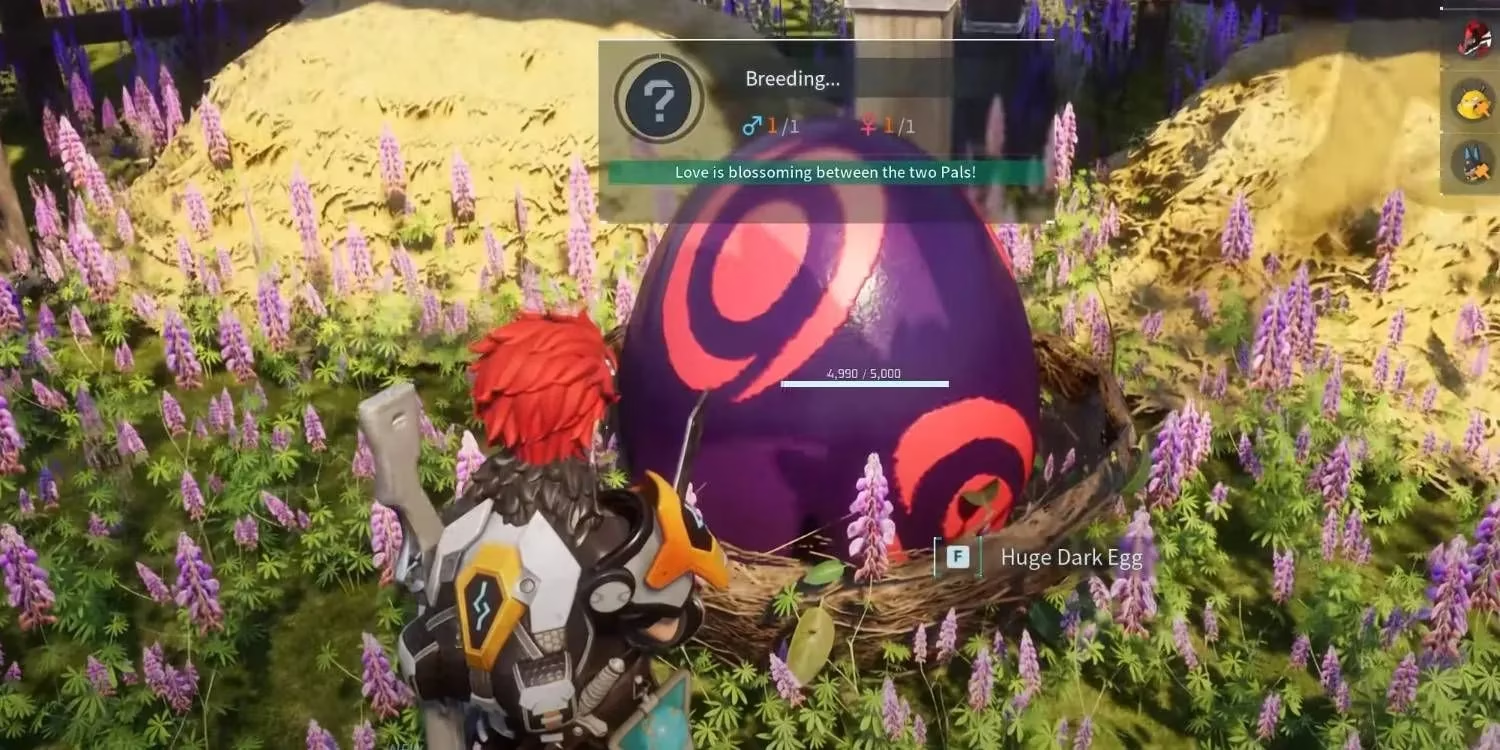
This can be exceptionally disheartening when the negated skill is central to a player's strategy. However, in this scenario, breeding offers a potential path forward—using that flawed wild Pal as a parent in the hopes that its desirable skill is passed on without its detrimental counterpart. The table below outlines common Passive Skills and their potential conflicts:
| Skill Name | Primary Effect | Potential Conflicting Skill | Conflict Result |
|---|---|---|---|
| Musclehead | +Attack% | None (direct conflict rare) | N/A |
| Work Slave | +Work Speed% | Slacker, Delicate | Reduced or nullified Work Speed |
| Artisan | +Work Speed% | Slacker, Delicate | Reduced or nullified Work Speed |
| Ferocious | +Attack% | Coward | Reduced offensive effectiveness |
| Lucky | +Work Speed, +Attack | Unlucky | Negates positive bonuses |
Strategic Considerations for Breeders in 2026
For players engaging with Palworld's systems today, awareness is the first line of defense. The highly variable nature of breeding results must be a central part of any breeding strategy. While the chance of accidentally creating a perfectly balanced, zero-bonus Pal like the infamous Penking is relatively low without specific intent, the broader risk of suboptimal combinations is ever-present. Players should consider the following approach:
-
Parent Selection is Key: Do not breed two Pals that each possess a skill with an opposing counterpart. If one parent has Work Slave, avoid using a parent with Slacker.
-
Manage Expectations: Understand that breeding is a numbers game. Planning for multiple breeding attempts to get the desired combination is more realistic than expecting perfection on the first try.
-
Resource Preparation: Ensure you have a surplus of Cakes (the essential breeding consumable) and have allocated dedicated breeding farms (like the Breeding Farm) before commencing a major breeding project.
-
Wild-Caught Foundation: Sometimes, it is more efficient to continue hunting for a wild Pal with a single perfect passive skill than to try and breed out multiple bad skills from parents.
Ultimately, Palworld's breeding mechanic is a double-edged sword. It provides a deep, engaging system for long-term player investment and the thrilling potential for creating a uniquely powerful companion. Yet, its foundation in randomness ensures that failure is an inherent part of the process. A Pal's list of Passive Skills can collectively have no net positive effect, rendering the creature a monument to wasted effort. As the game continues to evolve, this balance between high-risk and high-reward remains a defining, and often frustrating, characteristic of the Palworld experience. The dream of the perfect Pal is powerful, but the path to it is paved with surprising disappointments and lessons in probability.

Comments