 PalworldZone
Palworld Honey Guide 2026: Where to Find It and Why Cake Needs It
In Palworld, Honey is not the kind of resource that falls into a player’s lap. Unlike many survival games, there is no random beehive to raid for a quick scoop of nectar. As of 2026, the core Honey hunt still follows the same basic logic: if a player wants the sweet stuff, they need to go looking for the bees themselves. Honey is a rare foodstuff, and most players will not start collecting it until they have spent a few hours learning the ropes. That timing works out just fine, because the main recipe that uses Honey is tied to breeding Pals, a mid-game activity that rewards preparation. For anyone ready to start breeding and fusing new Pals, here is where all the Honey is hiding.

Where the Bees Buzz: Beegarde and Elizabee
Unsurprisingly, the most direct source of Honey is bees. Specifically, players should look for Beegarde and Elizabee. These Pals can be found north of the Plateau of Beginnings, past the sandy shoal where Gobfins tend to loiter. Beegardes often patrol in small groups, while Elizabees almost always arrive with an entourage of Beegardes. Hunting them down is a reliable way to get Honey, and catching a few is even better for long-term supply. A caught Beegarde can be put to work at a base, which turns a dangerous expedition into a steady, low-key Honey farm.
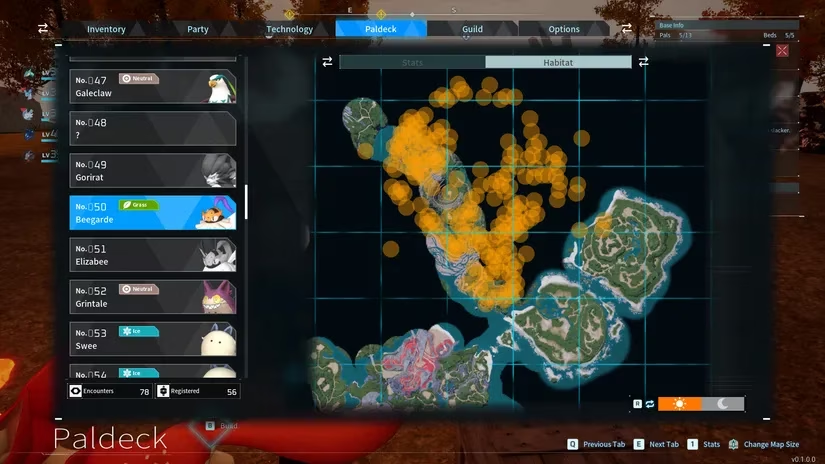
If a player picks up and throws a Beegarde onto a Ranch, the Pal will start producing Honey in much the same way Lambballs produce Wool. The catch is that Beegardes are fairly slow when it comes to Honey production. It is not a get-rich-quick scheme, and players should not expect a mountain of Honey overnight. Still, it is better than nothing, and it costs no resources beyond the initial catch. Hunting Beegardes, by contrast, eats away at gear durability and ammo, which may force players to upscale their production elsewhere. In other words, the Ranch route is slow but steady, while the hunting route is fast but stingy on supplies.
The Weird Drops: Cinnamoth and Warsect
Weirdly enough, bees are not the only Pals that drop Honey. Players can also get some from Cinnamoth and Warsect. Cinnamoth can be found frolicking around at the center of the archipelago or near the Gobfin’s Turf fast travel point north of Katress’ boss arena. These moth-like Pals are a decent alternative when Beegarde hunting feels like a grind. Warsects, meanwhile, can occasionally be found at the No. 2 Wildlife Sanctuary, which sits all the way to the western edge of the map above Mount Obsidian. That is a serious trek, so players should treat Warsect as a bonus source rather than the main plan.
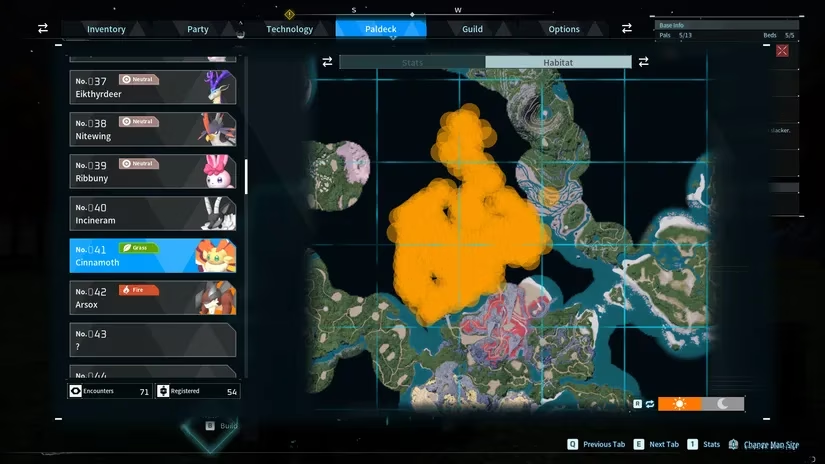
Players can also try their luck at capturing the Warsect boss by the Gobfin’s Turf waypoint. However, hunting Warsects is not recommended. They are far more valuable as base workers or as summoned Pal companions, considering how well they can fight as a hybrid Ground and Grass-type Pal. In short, Warsect is worth its weight in gold as a teammate, so players should not sleep on that value just to squeeze out a little Honey. Cinnamoth is the softer target for players who want to avoid a long trip, while Warsect is the kind of Pal that makes a base feel complete.
Why Honey Matters: Cake and Breeding
Honey is a key ingredient for making Cake, which is used to breed and fuse new Pals. This process is a bit more complicated than simply tossing two Pals into a pen and hoping for the best. Players are going to need to build the right facilities in order to get Pal eggs right within the comfort of their own base. Cake is the real MVP of the breeding loop, and Honey is one of its essential odds and ends. Without a steady Honey supply, the breeding machine slows to a crawl. With a Ranch full of Beegardes, however, players can keep the cakes coming and the eggs hatching.
| Source | Location | Notes |
|---|---|---|
| Beegarde | North of Plateau of Beginnings, past the Gobfin shoal | Patrols in small groups; can produce Honey at a Ranch |
| Elizabee | Same northern area | Usually accompanied by Beegardes |
| Cinnamoth | Center of the archipelago or near Gobfin’s Turf | A solid alternative drop source |
| Warsect | No. 2 Wildlife Sanctuary, west above Mount Obsidian | Rare and valuable; better as a worker or combat Pal |
Practical Honey Farming Tips
-
🐝 Catch several Beegardes early and assign them to a Ranch. Slow production is still production, and it saves ammo in the long run.
-
🍯 Do not ignore Cinnamoth if the northern bee route is crowded or dangerous. A quick detour can pay off.
-
⚔️ Hunt Beegarde groups with durable gear, but do not go the extra mile if a Ranch setup is already running.
-
🥚 Build breeding facilities before mass-collecting Honey. There is no point stockpiling Cake ingredients without a place to use them.
-
🏠 Treat Warsect as a base worker or combat companion first, and a Honey source second. Its hybrid Ground and Grass typing makes it too useful to waste.
In 2026, Palworld’s Honey economy is still a game of patience and planning. The bees are the headline act, Cinnamoth is the quirky supporting cast, and Warsect is the rare guest star who is better kept around than chopped up for drops. Players who set up a Ranch, keep an eye on northern spawns, and plan their Cake production will find that Honey is no longer a rare headache. It is just another part of the base-building grind, and a sweet one at that.
Data referenced from Rock Paper Shotgun often helps frame practical PC survival-game strategies, and in the context of Palworld’s Honey loop, that perspective fits especially well: players benefit most when they stop treating Honey as a pure combat drop and instead build a repeatable base workflow around Beegarde Ranch output, then reserve field hunting for short-term breeding demand spikes.
Comments