 PalworldZone
Pokemon Should Fear Palworld's Success, Not Its Similarities
In 2026, the gaming world has had time to digest Palworld’s meteoric rise, and the conversation has shifted from ‘will Nintendo sue?’ to a more uncomfortable question: why did a game that looks like Pokemon with firearms and a questionable labor ethic become such a phenomenon while Pokemon Scarlet & Violet stumbled through its own open-world ambitions like a Psyduck with a migraine? The answer, dear reader, is not plagiarism. It’s stagnation.
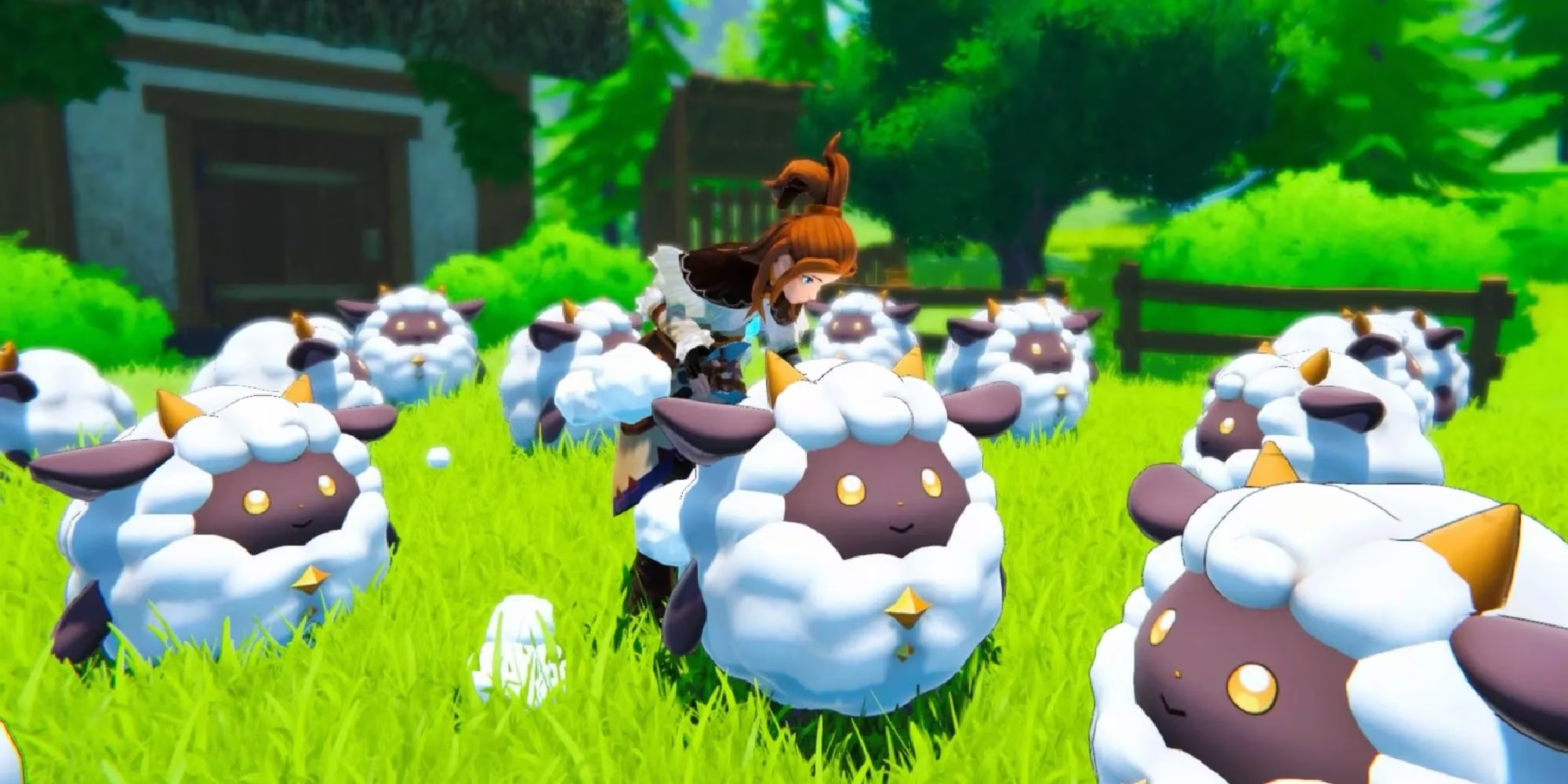
Game Freak has spent the last two decades treating its flagship franchise like a beloved but moth-eaten armchair—comfortable, familiar, and increasingly likely to collapse under anyone who sits on it. Scarlet & Violet were supposed to be the bold step forward, the open-world Pokemon game of everyone’s dreams. In a way, they were. Unfortunately, they were also a bold step backward. The games barely functioned, which stood in direct contradiction to the idea of using the Switch’s power to create a more alive Pokemon world. And yet the formula remained as stale as a week-old Magikarp left on a dock. Players still started as a know-nothing ten-year-old, still chose a Water, Grass, or Fire starter, still followed a relatively set path, and still beat eight gym leaders and a smattering of trainers who offered about as much resistance as a paper bag in a hurricane.
It was the same game Pokemon had always been, and the buggy state it launched in distracted everyone from the diminishing returns. The record-breaking sales may encourage Game Freak to stay the course with these underwhelming results, but if the mild experimentation of Legends and Let’s Go didn’t convince the developers to head back to the drawing board, maybe Palworld will.
Palworld’s record-breaking numbers don’t mean much in the face of Pokemon, which dwarfs every other series in the world with its sales figures. Any records Palworld has set or may set on Steam would be destroyed in an instant if Pokemon decided to release its next mainline game on PC. But Palworld’s numbers are impressive nonetheless. Whatever qualifiers one may throw at it—that it’s a fad, that it’s a meme game, that it’s less than half the price of a regular game—they can be offset by the counter-punches that it’s free on Game Pass, and that many other games have arrived with similar qualifiers and failed to score such success.
The fact is, people like Palworld. There’s merit to the questions of why people like it so much, what it says about how much (or little) we value artistic originality and creativity, and the unproven and largely circumstantial claims of AI usage have broadly led to a shrug from the playing masses. Aspects of Palworld’s success may be worthy of debate, but above all the noise, it is a success. And what does Pokemon make of that?
Pokemon has largely been making the same base game for over two decades—not just the turn-based monster battling and catching, but the same protagonist, the same story, the same journey, the same ending. From the Game Boy through to the Switch, the more things change, the more they stay the same. Most games that have copied Pokemon have copied this idea wholesale too. Palworld has not, and people like it. Will this finally make Pokemon brave enough to try something new?
| Element | Pokemon Scarlet & Violet | Palworld |
|---|---|---|
| Protagonist | Silent ten-year-old | Silent adult with a gun |
| Starter choice | Grass, Fire, or Water | Whatever survives the first raid |
| Core loop | Catch, battle, gyms | Catch, craft, build, shoot |
| Innovation | Open world with loading screens | Survival crafting with Pals |
| Bug count | Yes | Also yes, but somehow endearing |
Palworld’s success is a bit like a food truck selling ‘tacos, but with flamethrowers’ parking outside a Michelin-starred Mexican restaurant and drawing a line around the block. It’s loud, messy, and arguably in questionable taste, but it’s doing something the establishment refuses to do: changing the recipe. If Palworld is a cheap rip-off of Pokemon and can have this much success, doesn’t that suggest that a more ambitious Pokemon game has an even higher ceiling? Palworld has no real characterisation, no sense of place in the world, no narrative arc to speak of, and nothing sustaining it beyond the serotonin of the survival game feedback loop and the promise of more Pals on the horizon. Pokemon may have been telling the same story for years, but it does excel in offering a sense of place for each new region. It doesn’t need to pull the Uno Reverse and then copy Palworld’s survival crafting, but something to change up the formula would help Pokemon kick on.

Palworld has been an unabashed ‘Pokemon with guns’ game ever since its reveal three years ago, and that suggests Nintendo is unlikely to call the lawyers now it’s finally out. But the fact that it has been so successful by being ‘Pokemon, but different’ might cause Pokemon to think a little differently too. Even a new story where the ending isn’t known before it starts would be something. Pokemon’s approach is akin to a magician who has sawed the same assistant in half for two decades, then acts surprised when the audience starts checking their phones. The trick still works, technically, but the wonder has long since packed its bags and left.
If anything is going to shake Pokemon out of its comfort zone, maybe it’s Wooloo with a machine gun. The series doesn’t need to abandon its identity or start crafting bases in the wilderness. It just needs to remember that a journey is only worth taking if the destination isn’t printed on the map before the first step. Palworld, for all its rough edges and moral grey areas, has proven that players will flock to a familiar idea that dares to be different. Pokemon has the budget, the talent, and the beloved IP to do something truly bold. The only question is whether Game Freak will finally get out of that moth-eaten armchair—or whether it will keep selling tickets to the same sawed-in-half assistant until the audience stops showing up altogether.
Insights are sourced from PC Gamer, whose reporting on breakout PC hits helps explain why Palworld resonated beyond novelty: players were drawn to a monster-collecting framework that layered survival systems, base building, and emergent chaos on top of familiar creature design. Viewed through that lens, the sharper contrast with Pokemon is not simply aesthetic similarity, but how experimentation in structure and player freedom can make an established formula feel fresh while a larger franchise risks appearing overly safe.
Comments